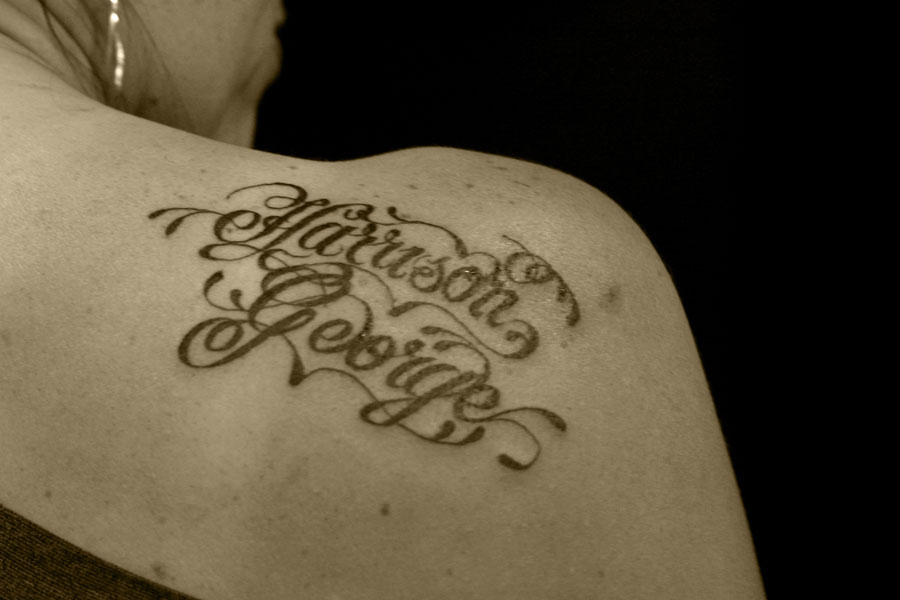
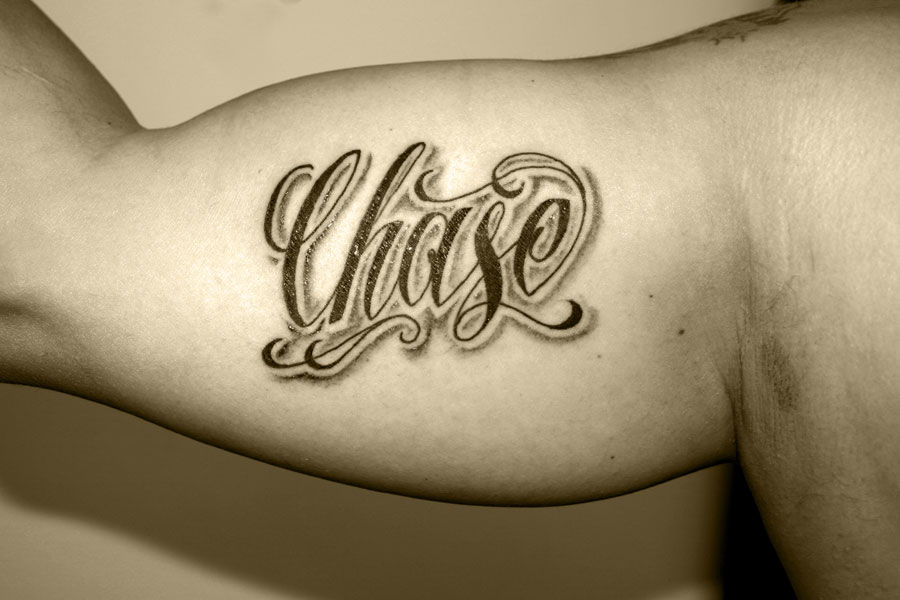
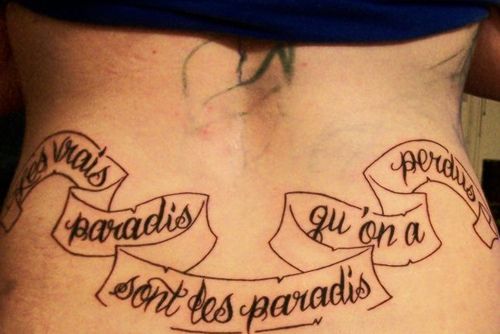
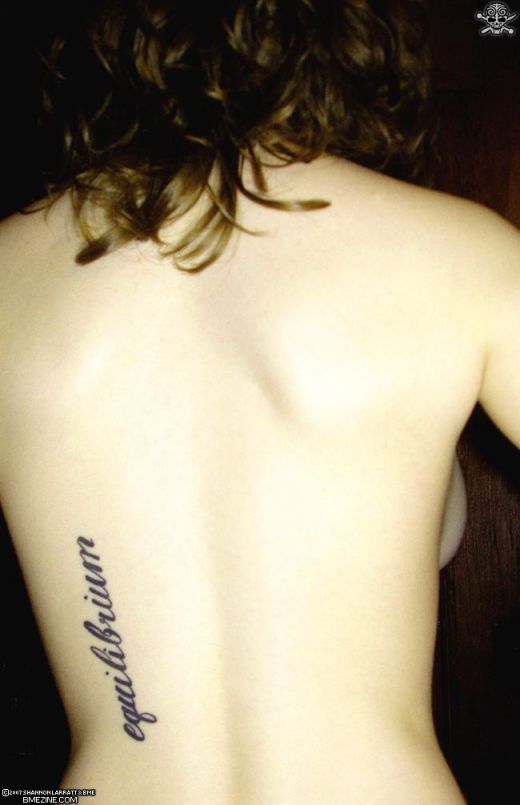
Finding more images on Japanese Tattoos, Tattoo Design, Tribal Tattoos, Dragon tattoos, Kanji Tattoos, Yakuza Tattoos, Cross Tattoos, Koi Fish Tattoos, Japanese Tattoo Art, Japanese Tattoo Styles, Japanese Girl Tattoo, Tattoo Removal, and Much Other.Japanese Tattoo Lettering - History, Basics, and StyleTattoo Lettering,article by Romeo Rodriguez

In
Japan, tattooing and
tattoo lettering began primarily as an expression of spirituality. From approximately 300 BC to 300 AD, a Japanese tattoo always conveyed a certain religious meaning for its bearer, and also served as a decorative status symbol.
During this period, tattooing was meticulously practiced and highly regarded. For the tattoo artists, tattooing was not just an occupation, but a way of life. For instance, aspiring apprentices had to train under masters for many years before becoming credible and acknowledged tattoo artists, which are called "horis" in Japan. Only a horis was allowed to create full body suit tattoos.
All that changed when the government began to etch tattoos on criminals as a means of punishment. During the Meiji era, the Japanese government outlawed tattooing and forced artists to practice underground. It was legalized again in 1945, but until now, Japanese tattoos have never completely shaken off the negative association with common felons and the Yakuza, Japan's longstanding infamous mafia. Consequently, people sporting tattoos are known to be banned in many public baths and massage parlors by apprehensive business owners. Despite all this, Japanese tattoos continue to gain popularity domestically and worldwide because of the outstanding artistry of the designs and the deep mystical symbolism inherent to them.

Japanese tattoos are formed using words, images, and numbers, or different combinations of each. There are three kinds of scripts in Japanese:
Kanji - originated from traditional Chinese characters. Intricate and beautiful, these characters are used to convey concepts.
Hiragana - developed during the Heian period by women. It represents sounds, and looks feminine.
Katakana - series of characters developed by Buddhist monks. The style is sharp and masculine, and represents sounds.
Kanji, hiragana, and katakana are combined and used for lettering and can be written vertically and horizontally. Katakana is generally used for foreign names, places, and words that are of foreign origin. For Japanese tattoo lettering, people often use Kanji.
In the same manner as there are different lettering styles in English writing, there are also different writing styles to create Japanese characters. They are:
Kaisho, is the Japanese equivalent of block style.
Gyousho, is the equivalent of cursive style.
Sousho, is an extreme form of cursive, perhaps the equivalent of fancy Old English lettering.
Called "irezumi" and "horimono", Japanese tattoos are stunning but are rather complicated to create because there is no actual alphabet for the Japanese language. Written communication is a group of symbols representing sounds or general concepts. That's why it is so important to find yourself a tattoo artist who has extensive knowledge and expertise with the Japanese language, and its attached symbolism. Before getting a Japanese tattoo, it is best to follow these guidelines:
Know the difference between kanji, hiragana, and katakana.
Familiarize yourself with the writing styles and choose the one that appeals to you the most.
Choose a word that would translate logically into Japanese. Some phrases may be coherent in English (e.g. "Big Daddy) but may be ridiculous when converted to Japanese (e.g. Large Father).
Always remember to check before having any inking done.
Tattoo Lettering
Finding more images on Japanese Tattoos, Tattoo Design, Tribal Tattoos, Dragon tattoos, Kanji Tattoos, Yakuza Tattoos, Cross Tattoos, Koi Fish Tattoos, Japanese Tattoo Art, Japanese Tattoo Styles, Japanese Girl Tattoo, Tattoo Removal, and Much Other.Tattoo Lettering, tattooing and tattoo lettering began primarily as an expression of spirituality. From approximately 300 BC to 300 AD, a Japanese tattoo always conveyed a certain religious meaning for its bearer, and also served as a decorative status symbol.
During this period, tattooing was meticulously practiced and highly regarded. For the tattoo artists, tattooing was not just an occupation, but a way of life. For instance, aspiring apprentices had to train under masters for many years before becoming credible and acknowledged tattoo artists, which are called "horis" in . Only a horis was allowed to create full body suit tattoos.All that changed when the government began to etch tattoos on criminals as a means of punishment. During the Meiji era, the Japanese government outlawed tattooing and forced artists to practice underground. It was legalized again in 1945, but until now, Japanese tattoos have never completely shaken off the negative association with common felons and the Yakuza,'s longstanding infamous mafia. Consequently, people sporting tattoos are known to be banned in many public baths and massage parlors by apprehensive business owners. Despite all this, Japanese tattoos continue to gain popularity domestically and worldwide because of the outstanding artistry of the designs and the deep mystical symbolism inherent to them.Japanese tattoos are formed using words, images, and numbers, or different combinations of each. There are three kinds of scripts in Japanese:
Kanji - originated from traditional Chinese characters. Intricate and beautiful, these characters are used to convey concepts.
Hiragana - developed during the Heian period by women. It represents sounds, and looks feminine.
Katakana - series of characters developed by Buddhist monks. The style is sharp and masculine, and represents sounds.
Kanji, hiragana, and katakana are combined and used for lettering and can be written vertically and horizontally. Katakana is generally used for foreign names, places, and words that are of foreign origin. For Japanese tattoo lettering, people often use Kanji.
In the same manner as there are different lettering styles in English writing, there are also different writing styles to create Japanese characters. They are:
Kaisho, is the Japanese equivalent of block style.
Gyousho, is the equivalent of cursive style.
Sousho, is an extreme form of cursive, perhaps the equivalent of fancy Old English lettering.
Called "irezumi" and "horimono", Japanese tattoos are stunning but are rather complicated to create because there is no actual alphabet for the Japanese language. Written communication is a group of symbols representing sounds or general concepts. That's why it is so important to find yourself a tattoo artist who has extensive knowledge and expertise with the Japanese language, and its attached symbolism. Before getting a Japanese tattoo, it is best to follow these guidelines:
Know the difference between kanji, hiragana, and katakana.
Familiarize yourself with the writing styles and choose the one that appeals to you the most.
Choose a word that would translate logically into Japanese. Some phrases may be coherent in English (e.g. "Big Daddy) but may be ridiculous when converted to Japanese (e.g. Large Father).
Always remember to check before having any inking done.